Sage Reading Rooms
The Emperor’s
Notebook
Meditations · All Twelve Books
Modernized by Sage · with George Long (1862) beside it
Thirty unhurried readings through a private notebook. Keep the lines that matter, then bring any question to Marcus beside the page.
These entries were written to be reread, not read. Take them one at a time, and let each finish before you start the next.
Begin the morning by saying to yourself: I will meet with the meddler, the ungrateful, the arrogant, the deceitful, the envious, the unsociable. All this happens to them because they don't know good from evil. But I have seen that good is beautiful and evil is ugly. I have also seen that the wrongdoer is akin to meII.1
II.2Whatever this is that I am, it is a bit of flesh and breath, and the ruling part. Throw away your books; stop letting yourself be distracted—that's not allowed anymore. Instead, as if you were dying right now, despise the flesh: it's blood and bones and a mesh, a web of nerves, veins, and arteries. Look too at what the breath is—air, and not even the same air, but expelled and drawn in again every moment. The third thing, then, is the ruling part. Consider this: you are an old man. Don't let this part go on being enslaved, no longer let it be jerked about like a puppet on strings toward unsociable impulses, no longer let it resent its present lot or shrink back from the future.
Your kept line
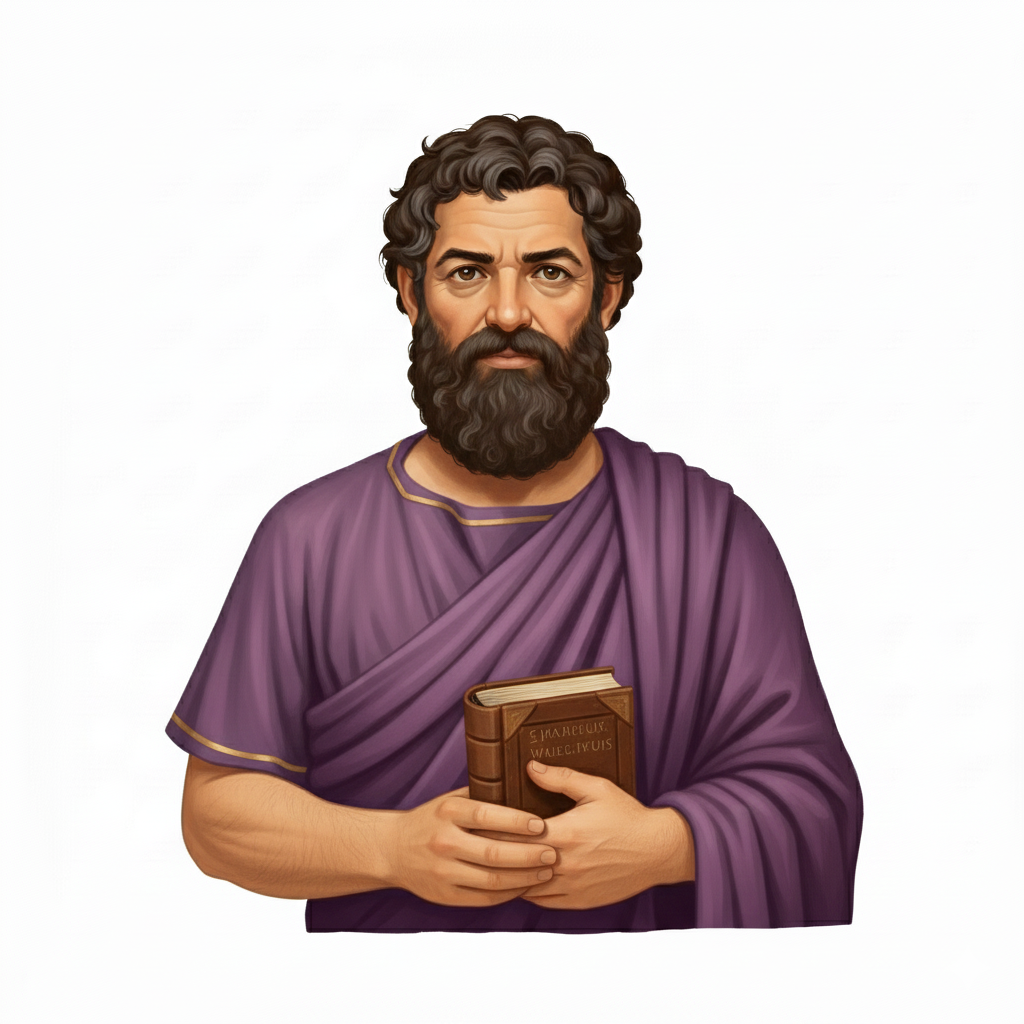
Marcus Aurelius
Ignorance, not malice. That belief is what let me meet rude men without carrying them all day. Does it survive contact with the one you’re thinking of?
Tap a different line to keep it instead.
Meditations, Book II · Modernized (recommended)* · *Modernized by Sage
Specimen · Reading 3 of 30
The thirty readings
All Twelve Books, always open
Choose any short sitting. Sage keeps an in-order suggestion for you, but every page remains open.
◆Every seventh reading turns back through the lines you kept before going on.
The commonplace book
Leave with a book of your own
Each reading can hold one kept line and your own margin note. Questions you choose to ask stay with that reading. Every seventh reading turns back through earlier lines; by reading 30 they form a commonplace book drawn from the whole work.
Three keepings a reader might make, ten readings in. Yours will be different — that is the point.
The universe is transformation: life is opinion.Reading 4 · II.17
Nowhere either with more quiet or more freedom from trouble does a man retire than into his own soul.Reading 7 · IV.3
In the morning when thou risest unwillingly, let this thought be present — I am rising to the work of a human being.Reading 10 · V.1
Your notes · your discussions · editable by you
Reading 10 of 30
About the book
A notebook never meant to be read
Meditations is the private notebook of Marcus Aurelius, emperor of Rome from 161 to 180 CE — the strangest bestseller in philosophy: a book with no title, no audience, and no intention of surviving its author.
There is no other book quite like it — absolute power arguing itself back down to patience, fairness, and work. He repeats himself because he expects to fail and try again. If you have ever rehearsed an argument at two in the morning, the entries are about you; their habits of self-examination run forward into modern Stoicism and the cognitive traditions of therapy. For centuries it has been the book people under pressure reach for — generals, statesmen, athletes, and people who simply cannot sleep.
The life of the notebook
ΤΑ ΕΙΣ ΕΑΥΤΟΝ
Παρὰ τοῦ πάππου Οὐήρου τὸ καλόηθες καὶ ἀόργητον.
c. 170
Written in Greek, at night, in camp — addressed to no one.
M. Antonini Imperatoris
de seipso seu vita sua
libri xii
❦
Tigvri · M·D·LIX
1559
Hand-copied for a millennium, then first printed in Zurich.
The Thoughts of
The Emperor
M. Aurelius Antoninus
Translated by George Long
London · 1862
1862
The historical English of this room — kept beside the modernized text.
Meditations
Marcus Aurelius
30 Readings
When you return
At your place. Your kept lines join it.
The same notebook, four bodies — eighteen centuries from his hand to your reading place.
Where it meets your week
Begin here
The first page is short.
Six minutes of reading. Keep a line or ask a question if you wish; the rest of the book waits until you return.
Free to read · your kept lines stay yours